Football helmets honor indigenous cultures
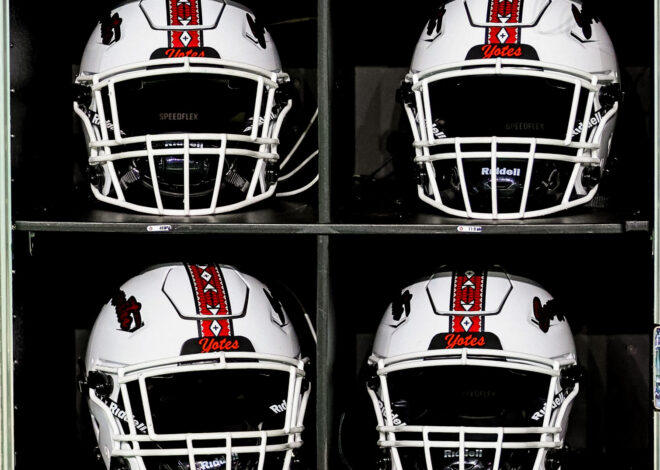
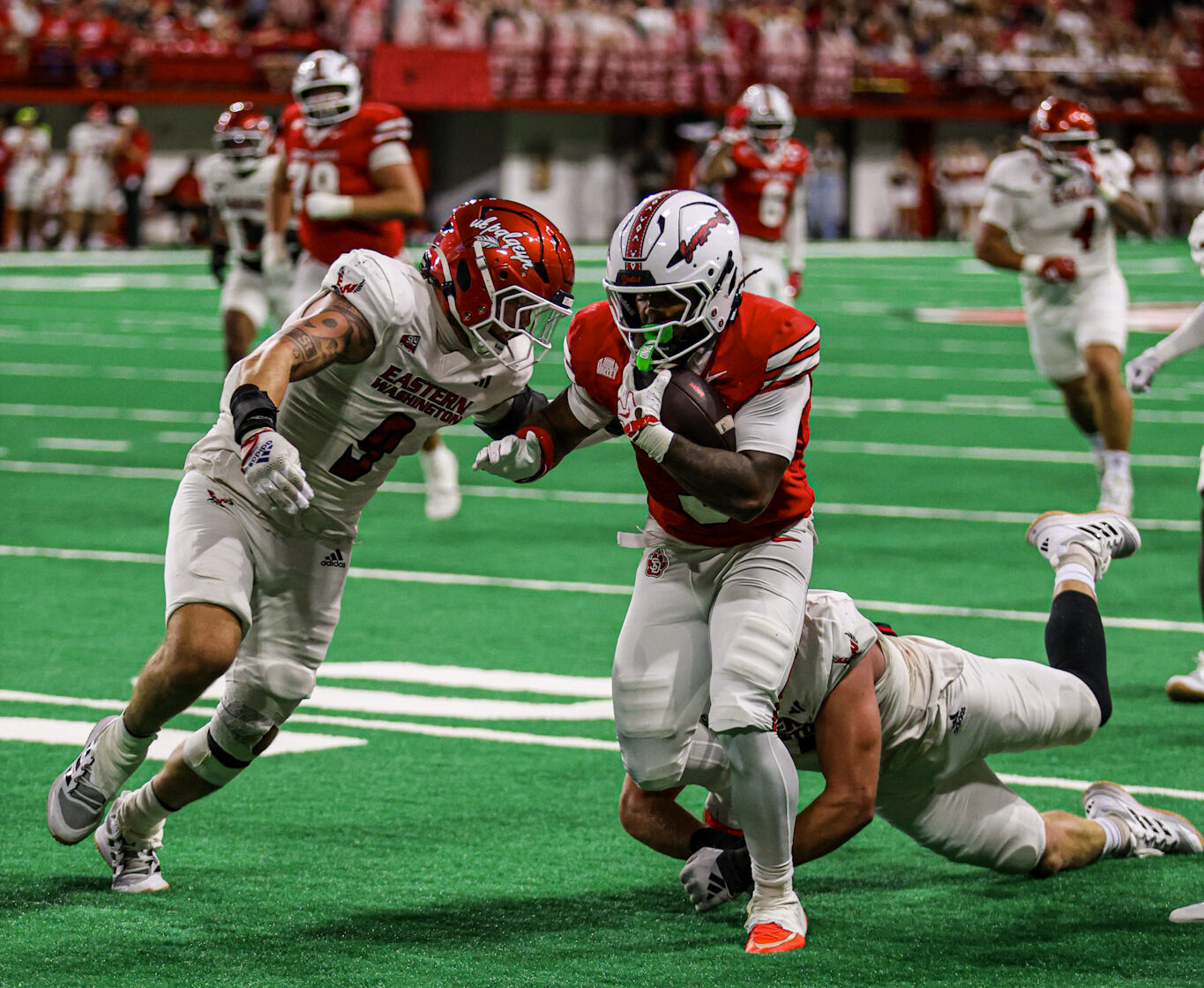
Last weekend marked a historic moment in the Dakota Dome. It was the first time in Division I history that both teams wore helmets with Indigenous wording.
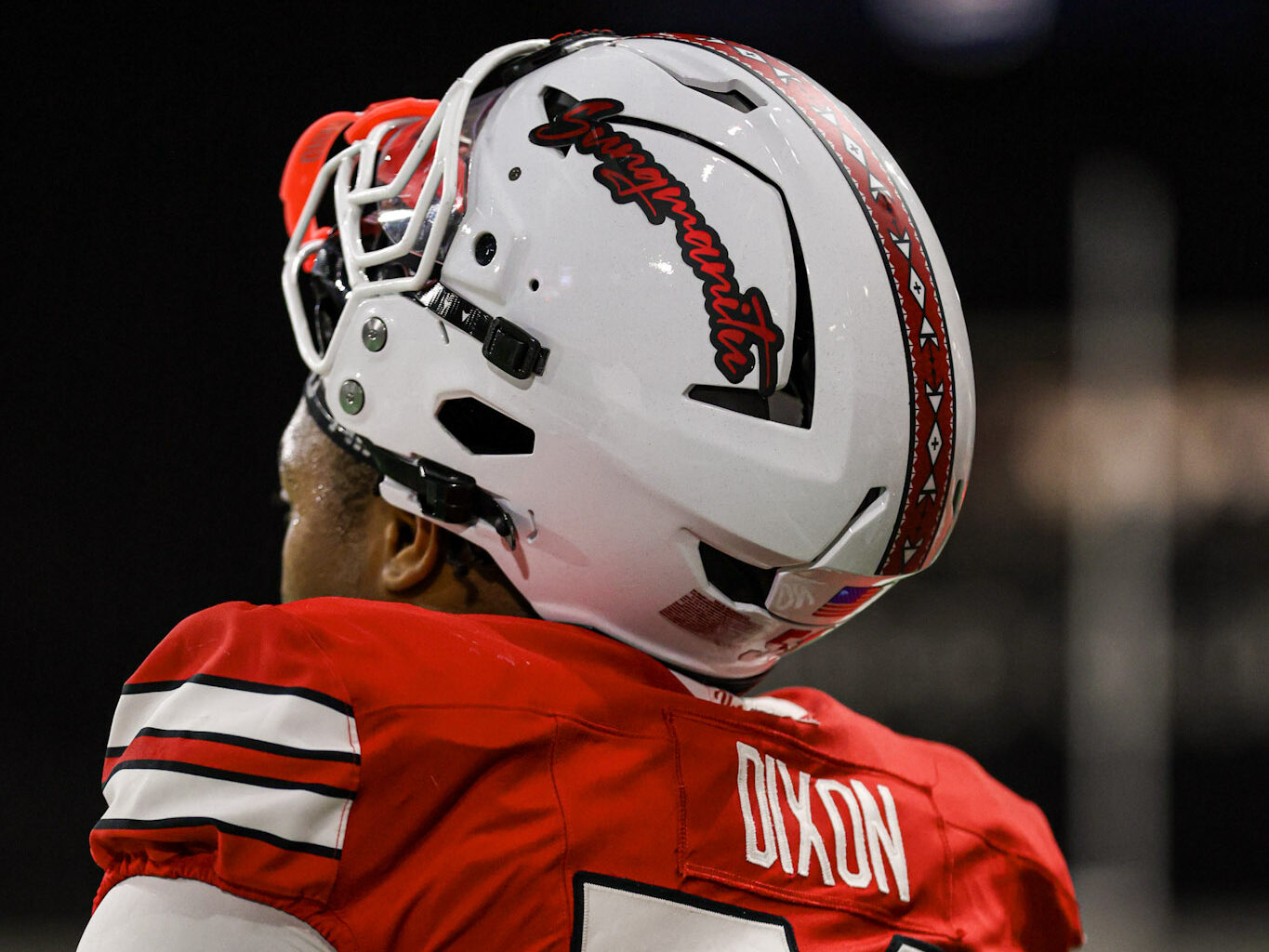
South Dakota’s helmets read “Sungmanitu,” which is Lakota for coyote. The helmets debuted last season.
The helmet decals were designed by Sadie Red Wing (Spirit Lake Dakota).
Eastern Washington’s helmet decals displayed the Salish phrase “uł pqlqeyn,” which translates to “group of eagles.” The decal was first worn by EWU in 2024.
“My responses are based on my academic training in Indigenous studies and U.S. history. I do not speak on behalf of Tribal Nations, Indigenous Peoples, the Institute of American Indian Studies or USD.”
Dr. Elise Boxer is the director of the Institute of American Indian Studies at USD.
“This is a good first step in the symbolic representation of Indigenous Peoples and languages on helmets, but I am more interested in what happens next,” Boxer said.
Dr. Elise Boxer
“How do these respective institutions increase access to institutions of higher education? Do these sports teams go into the Indigenous communities whose languages appear on their helmets and provide training camps or access to the sport? How is talent being cultivated in these communities so they can be prepared to compete at the Division I level? What type of cultural and historical education do players receive to have a better understanding of the Indigenous Peoples and Tribal Nations that the helmet represents?”
Boxer also has personal connections to both schools.
“On a more personal note, my first academic job was at Eastern Washington University, so I was excited to see these two teams play one another,” Boxer said. “I brought my family to enjoy the game, which speaks to the power of a sport, like football, to bring fans together.”

Related Posts
Coyote Crazies 30th anniversary